The Art of Custom Process Hoppers for Enhanced Bulk Material Handling
Understanding the Role of Custom Process Hoppers in Bulk Material Handling
The Importance of Customization in Material Handling
Custom process hoppers play a pivotal role in enhancing bulk material handling operations across various industries. Unlike standard hoppers, which may not cater to specific needs, customized solutions offer tailored dimensions and configurations that align perfectly with operational requirements. Customization allows businesses to optimize the flow of materials, ensuring efficient handling of different bulk materials such as recyclables, scrap, and concrete. By designing hoppers that fit seamlessly into existing systems, companies can significantly improve productivity and reduce downtime. This tailored approach also enhances safety, as custom hoppers can incorporate features like guardrails to protect workers while minimizing the risk of material spillage.
How Custom Hoppers Improve Productivity
Productivity hinges on the efficiency of material handling processes. Custom process hoppers streamline operations by facilitating quick loading and unloading of bulk materials. Their design considers the specific properties of the materials being handled, such as size, weight, and flow characteristics. For instance, hoppers designed to handle concrete must account for the material's viscosity and density, ensuring smooth transitions into conveyor systems. By minimizing blockages and optimizing flow rates, custom hoppers can enhance the overall throughput of manufacturing processes. Moreover, the integration of features like gates and adjustable openings allows operators to control the discharge rate, further boosting productivity during peak operation times.
The Role of Material Dimensions in Hopper Design
The dimensions of custom process hoppers significantly influence their performance in bulk material handling. Accurate measurements ensure proper fit within existing systems, such as conveyor systems and pallet racks, while accommodating the specific characteristics of the materials involved. For example, a hopper designed for handling recyclables will differ in size and shape from one intended for concrete. The engineering team must take into account factors like the bulk density and flowability of the materials to prevent issues like bridging or clumping. By focusing on these dimensions, companies can design hoppers that not only fit snugly into their operations but also enhance the efficiency and safety of material handling processes.
Design Considerations for Custom Process Hoppers
Selecting the Right Materials: Stainless Steel vs. Sheet Metal
The choice of materials for custom process hoppers is critical to their durability and performance. Stainless steel, known for its corrosion resistance and strength, is often preferred for applications involving wet or abrasive materials. Its longevity makes it ideal for environments like concrete manufacturing, where exposure to harsh conditions is common. On the other hand, sheet metal offers a cost-effective solution for lighter applications. While it may not provide the same level of resistance as stainless steel, it can still perform adequately in non-corrosive environments. Companies must evaluate the specific demands of their operations and choose materials that will withstand wear and tear while ensuring a safe and efficient bulk material handling process.
Incorporating Guardrails and Safety Features
Safety remains a top priority in bulk material handling. Custom process hoppers can be designed with guardrails and other safety features to protect workers and minimize accidents. Guardrails prevent workers from accidentally falling into hoppers, while additional features like safety gates help control access to potentially hazardous areas. Incorporating these elements not only complies with safety regulations but also fosters a culture of safety within the workplace. By prioritizing safety in the design phase, companies can reduce the risk of injuries and associated costs, ensuring a smoother operation and protecting their most valuable assets—their employees.
Optimizing Hopper Shapes: Cones and Gates for Efficiency
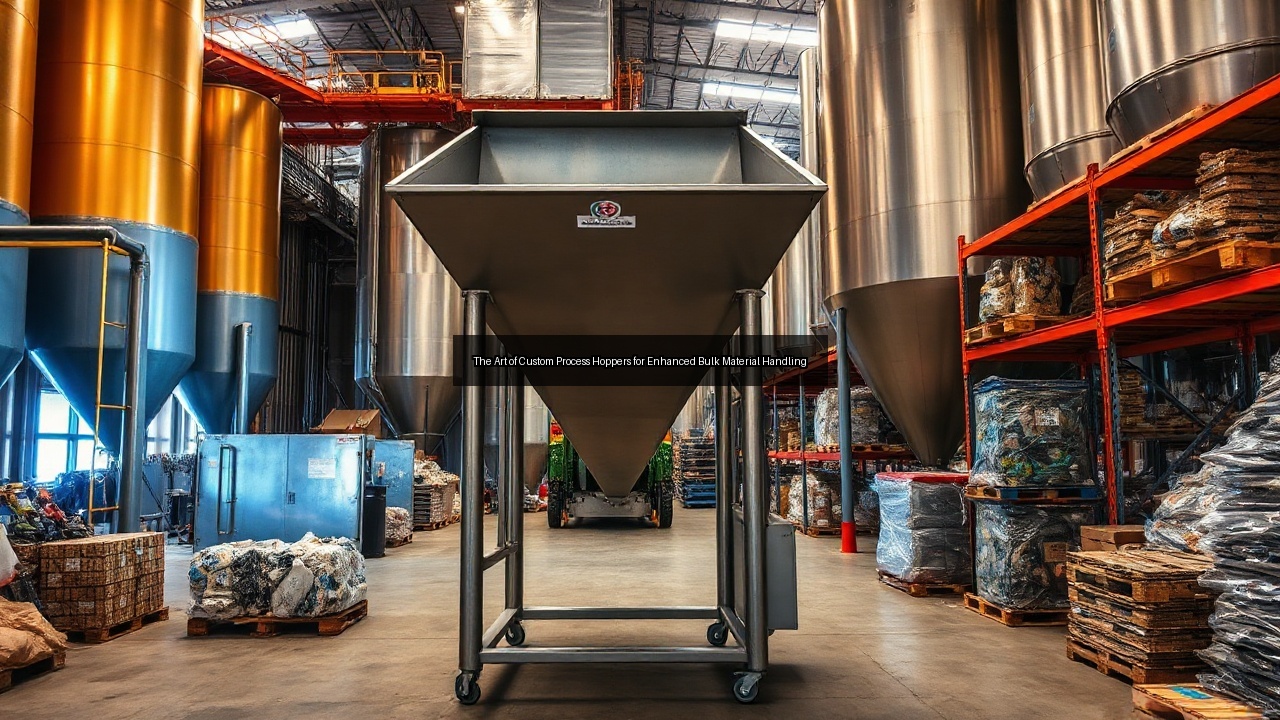
The shape of custom process hoppers directly impacts material flow and handling efficiency. Conical hoppers, for instance, facilitate the smooth downward flow of bulk materials, reducing the risk of clogging. Meanwhile, gates allow for precise control over material discharge, enabling operators to manage the flow rate effectively. Designing hoppers with optimized shapes improves overall material handling efficiency, particularly in conjunction with conveyor systems. These enhancements lead to faster loading and unloading processes, ultimately resulting in improved productivity. Companies should work closely with fabrication experts to ensure their hoppers are not only functional but also tailored for specific operational needs.
Integration of Custom Hoppers with Existing Systems
Hoppers and Conveyor Systems: A Seamless Connection
Integrating custom process hoppers with existing conveyor systems is essential for achieving a streamlined material handling operation. Proper alignment and design ensure that materials flow smoothly from the hopper into the conveyor without interruptions. This connection minimizes the risk of material spillage and enhances the overall efficiency of the system. Custom hoppers can be designed to match the height and width of conveyor belts, ensuring compatibility and seamless operation. By focusing on this integration, companies can achieve a more cohesive workflow, optimizing both time and resources in their material handling processes.
Enhancing Warehousing Solutions with Custom Hoppers
Custom hoppers also play a vital role in enhancing warehousing solutions. In a warehouse setting, efficient storage and retrieval of bulk materials can significantly affect operational efficiency. Custom process hoppers can be designed to fit within existing pallet racks, maximizing space and ensuring easy access to materials. This strategic placement reduces the time spent locating and transporting materials, thereby improving workflow. Additionally, incorporating features such as casters on hoppers allows for mobility, enabling workers to reposition them as needed without heavy lifting or cumbersome maneuvers. The result is a more adaptable and efficient warehousing environment.
Utilizing Casters for Mobility in Material Handling
Mobility in material handling offers flexibility and efficiency, particularly in dynamic work environments. Custom process hoppers equipped with casters provide the ability to easily move hoppers to different locations as needed. This feature is particularly beneficial in manufacturing settings where material types and flow rates frequently change. Workers can reposition hoppers to align with evolving production lines or shifts in workflow, reducing downtime during transitions. Casters also facilitate the easy cleaning and maintenance of hoppers, ensuring that they remain in optimal working condition. The combination of mobility and ease of maintenance promotes a safer and more efficient material handling process.
Applications and Benefits of Custom Process Hoppers
Handling Recyclables and Scrap Materials
Industries focused on recycling and material recovery benefit significantly from custom process hoppers. These hoppers are designed to efficiently handle different types of recyclables and scrap materials, facilitating their separation and processing. Custom features, such as adjustable gates, allow operators to manage the flow of materials effectively, reducing the risk of contamination and ensuring high-quality recovery. This targeted design not only enhances efficiency but also aligns with sustainability initiatives, as companies can maximize the recovery of valuable materials while minimizing waste.
Custom Hoppers in Concrete Manufacturing
Concrete manufacturing relies heavily on effective material handling, making custom process hoppers indispensable. These hoppers can be tailored to accommodate the unique characteristics of concrete, such as its density and viscosity. Their design can include features that facilitate the mixing and transport of concrete ingredients, ensuring a smooth transition from storage to mixing and delivery. By optimizing this process, manufacturers can produce high-quality concrete while reducing operational costs. Custom hoppers also contribute to safety by minimizing risks associated with handling heavy materials, thus protecting workers and enhancing overall productivity.
Improving Workflow with Pallet Racks and Hoppers
Combining custom process hoppers with pallet racks creates a highly efficient workflow in material handling operations. This configuration allows for organized storage of bulk materials, enabling easy access and reducing the time spent on retrieval. Hoppers designed to fit seamlessly within pallet racks maximize vertical space while providing a systematic approach to material storage. This integration enhances the overall workflow by streamlining the process of moving materials from storage to production. Companies leveraging this synergy can improve operational efficiency, reduce waste, and ultimately boost their bottom line.